
I’m always in a hurry. Between cleaning the house, spending time with the kitties, and keeping up with work, it often feels like the day should have at least 26 hours just to get things done and still leave room to enjoy living. Cooking, however, is one of the few places where time softens a little for me. I’ve always loved being in the kitchen, and I know that love was passed down. I believe both of my grandmothers were wonderful cooks.
I didn’t get to spend much time with my grandmother Júlia, my father’s mother. She lived in Leiria, and back then traveling wasn’t as simple as it is today. She passed away when I was only seven, so while I cherish every moment we shared, there weren’t many. Still, she lives on through my father’s stories and through the objects that quietly became part of my life, carrying her presence with them.
I grew up much closer to my grandmother Ilda, watching her cook day after day—creating comforting, delicious meals with ingredients from the market, local groceries, and often whatever leftovers were waiting in the fridge. Nothing was wasted. Everything had potential. That way of cooking stayed with me.
When I decided to start eating more at home, I realized I actually did have the time—I just needed to use it differently. That’s when I began opening my cabinets with curiosity instead of a strict plan, letting instinct guide me. A little tradition, a little improvisation. This might work… oh, this could go well together… what else do I need?
This dish is exactly that: a mixture of recipes, memories, and intuition. A little bit of this, a little bit of that. A recipe born from tradition, creativity, and the simple joy of making something comforting from what’s already there.
Here is the creation.
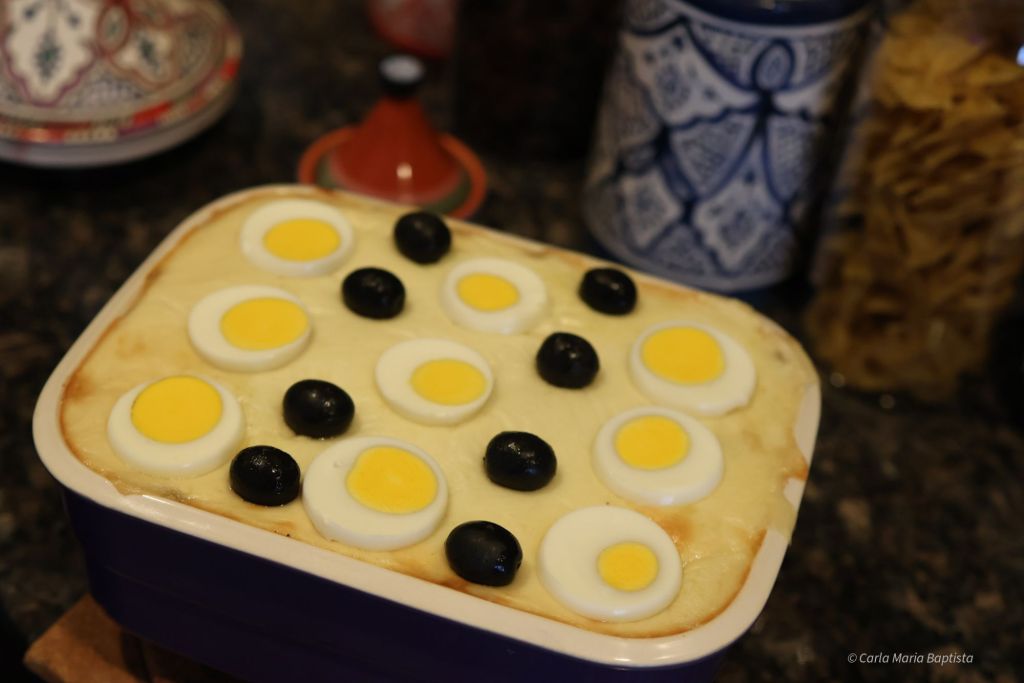
Fish and Shrimp Potato Gratin with Béchamel Sauce
Ingredients
Fish & shrimp layer
Olive oil – 2 tablespoons
Onion – 1 medium, thinly sliced
Bay leaf – 1
Red pepper flakes – ¼ teaspoon (adjust to taste)
White fish fillets (skinless, boneless; cod, haddock, hake, etc.) – 500 g / 1.1 lb, cut into chunks
Shrimp (peeled and deveined) – 250 g / ½ lb
Salt – to taste
Dry white wine – ½ cup (120 ml)
Garlic – 2 cloves, thinly sliced
Creamy thickener (fish mixture)
Milk – 1 cup (240 ml)
Cornstarch – 1½ tablespoons
Béchamel sauce
Butter – 4 tablespoons (55 g)
All-purpose flour – 4 tablespoons (about 30 g)
Milk – 3 cups (720 ml), warm
Salt – to taste
White pepper – to taste
Nutmeg – a pinch (optional)
Gratin assembly
Potatoes – 1 kg / about 2.2 lb, peeled and sliced ~2 mm thick
Hard-boiled eggs – 2–3, sliced (optional)
Black or green olives – ¼ cup, sliced (optional)
To finish
Chives – 2–3 tablespoons, for sprinkling before serving
Instructions
1. Prepare the fish and shrimp
Heat the olive oil in a wide pan over medium heat. Add the sliced onion, bay leaf, and red pepper flakes. Cover and cook until the onion becomes translucent, stirring occasionally (about 5–7 minutes).
Add the fish and shrimp, season with salt, stir gently, cover, and cook for about 3 minutes.
Pour in the white wine, stir, add the sliced garlic, and let it simmer uncovered until the wine reduces slightly and the garlic becomes fragrant (3–5 minutes).
2. Thicken the mixture
In a small bowl, whisk the milk and cornstarch until smooth. Gradually add a few tablespoons of the hot cooking liquid to temper the mixture.
Slowly stir it back into the pan and cook over low heat until thickened and creamy. Adjust seasoning and remove the bay leaf.
3. Make the béchamel
In a saucepan, melt the butter over medium heat. Add the flour and cook for 1–2 minutes without browning.
Gradually whisk in the warm milk, stirring constantly, until smooth and creamy. Season with salt, white pepper, and nutmeg if using. Set aside.
4. Assemble the gratin
Preheat the oven to 350°F (175°C).
In a baking dish, layer the thinly sliced potatoes and the fish mixture, starting and ending with potatoes.
Top with the béchamel sauce and decorate with sliced hard-boiled eggs and olives, if desired.
5. Bake
Cover with foil and bake for 60–75 minutes, until the potatoes are fully tender when pierced with a knife.
Remove the foil for the last 10–15 minutes to allow the top to lightly brown.
6. Serve
Sprinkle with chives just before serving.
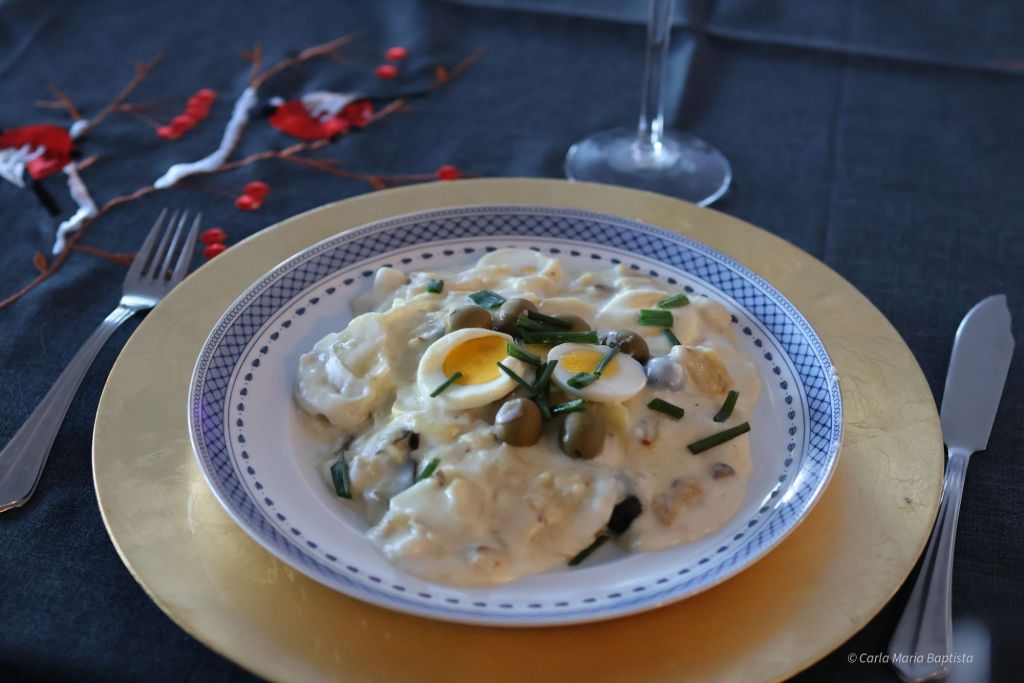
Tips & Tricks for the Perfect Gratin
Fish: Use skinless and boneless fish fillets to make preparation easier and avoid surprises on the plate.
Shrimp: Make sure the shrimp are peeled and deveined (cleaned) before cooking.
Red pepper flakes: Adjust the amount to taste to control the spiciness level.
White wine: Preferably use a dry white wine for cooking.
Cornstarch and milk mixture: Whisk thoroughly to avoid lumps before adding to the stew.
Butter and flour roux: Stir constantly during the 1–2 minutes of cooking to prevent burning.
Potatoes: Slice about 2 mm thick for even cooking (a mandoline slicer helps a lot).
Foil cover: Cover loosely, not tightly, to avoid soggy topping.
Potato doneness: Check by piercing with a fork or knife. Cooking time may vary, so extend baking if necessary to ensure softness.
Grandmother’s tip: To speed up cooking, parboil the potato slices in salted boiling water for 3–5 minutes before assembling the dish. Water – enough to cover potatoes
Salt – 1–2 teaspoons for the boiling water
Final note
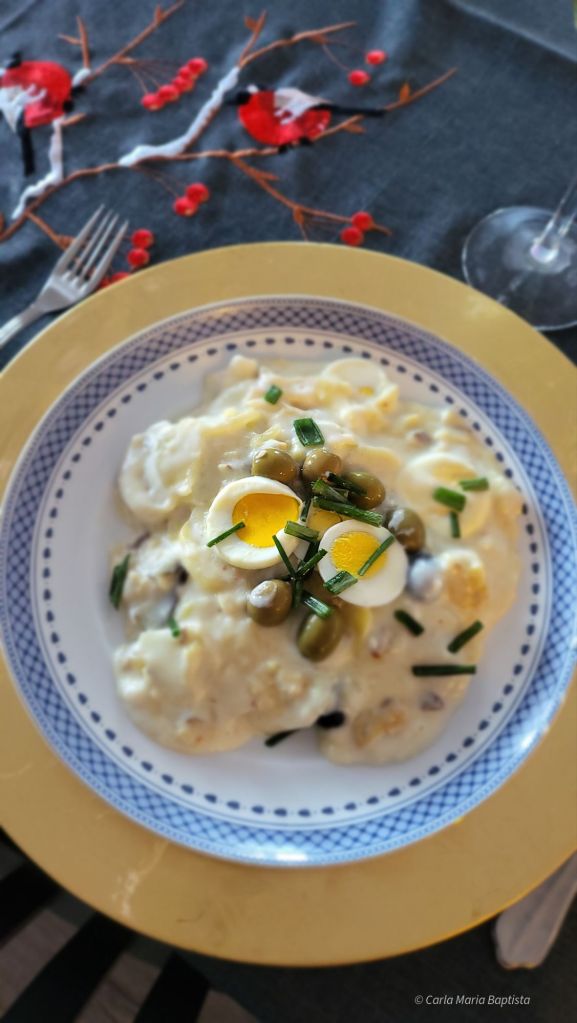
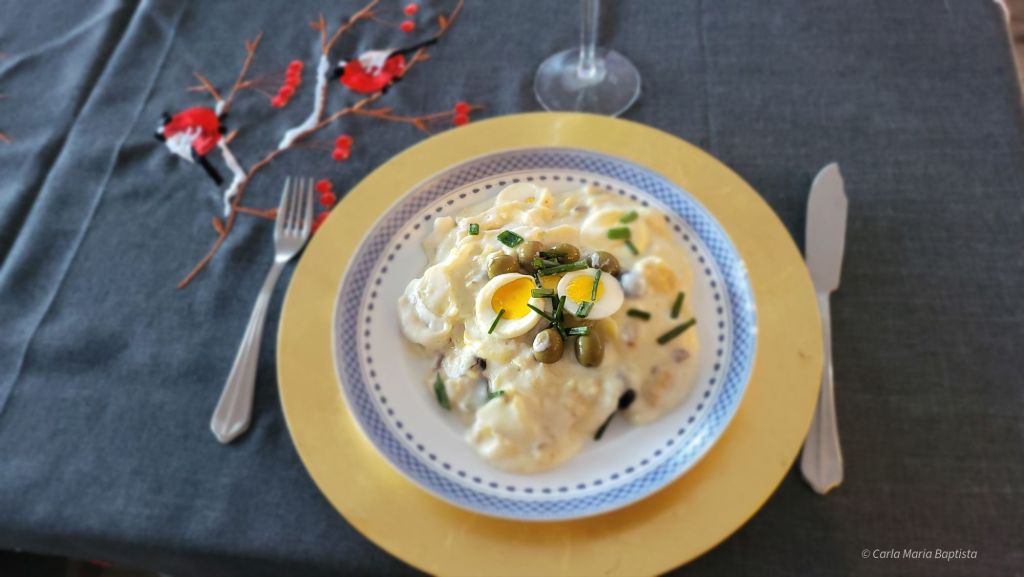
The gratin came out of the oven softly golden, the béchamel smooth and glossy, topped with slices of hard-boiled egg and scattered olives like quiet punctuation marks. Simple, familiar, and deeply comforting — a humble dish, carrying memory and the kind of kitchen wisdom passed down through generations.
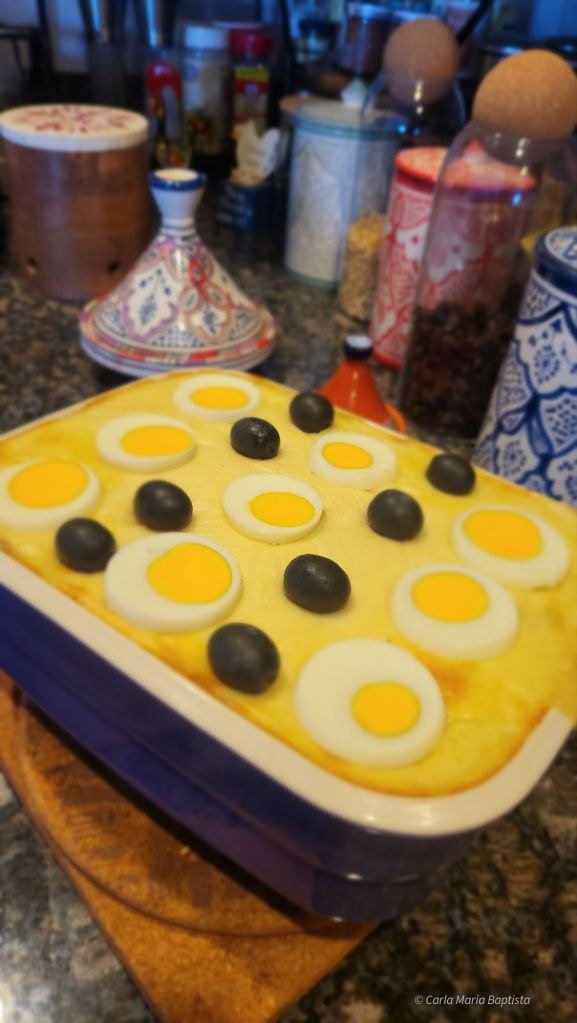
Sabores da Minha Cozinha: Gratinado de Peixe com Béchamel Caseiro
Estou sempre com pressa. Entre limpar a casa, passar tempo com os gatos e o trabalho, muitas vezes sinto que o dia precisava de ter pelo menos 26 horas para conseguir fazer tudo e ainda assim aproveitar a vida. Cozinhar, no entanto, é um dos poucos momentos em que o tempo abranda um pouco para mim. Sempre gostei de estar na cozinha e sei que esse gosto não surgiu do nada, foi herdado. Ambas as minhas avós eram excelentes cozinheiras.
Não tive a oportunidade de passar muito tempo com a minha avó Júlia, a mãe do meu pai. Ela vivia em Leiria e, naqueles tempos, viajar não era tão simples como é hoje. Faleceu quando eu tinha apenas sete anos e, embora guarde com carinho todos os momentos que partilhámos, foram muito poucos. Ainda assim, ela continua presente através das histórias que o meu pai me contou e dos objectos que, silenciosamente, passaram a fazer parte da minha vida.
Cresci mais próxima da minha avó Ilda, a vê-la cozinhar dia após dia, a criar refeições reconfortantes e cheias de sabor com produtos do mercado, das mercearias locais e, muitas vezes, com sobras que ganhavam uma nova vida no dia seguinte. Nada se desperdiçava. Tudo tinha potencial. Essa forma de cozinhar ficou comigo.
Quando decidi começar a comer mais em casa, percebi que afinal o tempo existia, só precisava de o usar de outra forma. Foi aí que comecei a abrir os armários com curiosidade em vez de um plano rígido, deixando a intuição guiar-me. Um pouco de tradição, um pouco de improviso. Isto pode resultar… isto combina bem… o que mais falta?
Este prato é exactamente isso: uma mistura de receitas, memórias e instinto. Um pouco disto, um pouco daquilo. Uma receita nascida da tradição, da criatividade e do simples prazer de transformar o que já existe em algo reconfortante.
Aqui fica a criação.
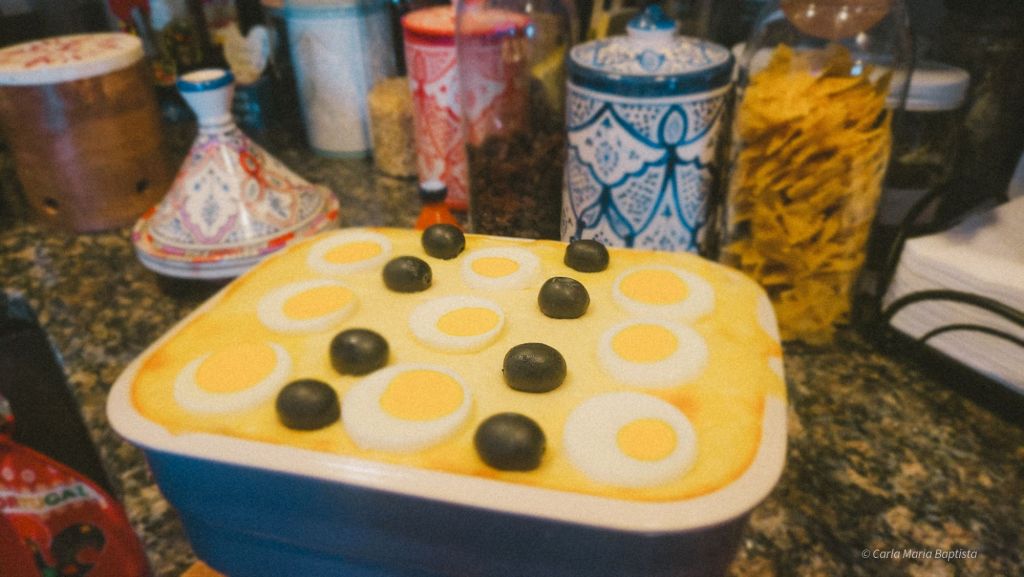
Gratinado de Peixe e Camarão com Batata e Molho Béchamel
Ingredientes
Peixe e camarão
Azeite – 2 colheres de sopa
Cebola – 1 média, cortada em meias-luas finas
Folha de louro – 1
Piripíri em flocos – ¼ colher de chá (ou a gosto)
Peixe branco (sem pele nem espinhas – pescada, bacalhau fresco demolhado, linguado, paloco, etc.) – 500 g, cortado em pedaços
Camarão (descascado e limpo) – 250 g
Sal – q.b.
Vinho branco seco – 120 ml (½ chávena)
Alho – 2 dentes, laminados
Para engrossar o preparado de peixe
Leite – 240 ml (1 chávena)
Amido de milho (Maizena) – 1½ colheres de sopa
Molho Béchamel
Manteiga – 55 g (4 colheres de sopa)
Farinha de trigo – 4 colheres de sopa
Leite – 720 ml (3 chávenas), morno
Sal fino – q.b.
Pimenta branca – q.b.
Noz-moscada – uma pitada (opcional)
Montagem do gratinado
Batatas – 1 kg, descascadas e cortadas em rodelas finas (≈ 2 mm)
Ovos cozidos – 2 a 3, às rodelas (opcional)
Azeitonas pretas ou verdes – cerca de 50 g, às rodelas (opcional)
Finalização
Cebolinho picado – 2 a 3 colheres de sopa
Preparação
1. Preparar o peixe e camarão
Num tacho largo ou frigideira funda, aqueça o azeite em lume médio. Junte a cebola, a folha de louro e malagueta seca moída Tape e deixe cozinhar até a cebola ficar translúcida, mexendo de vez em quando (cerca de 5–7 minutos).
Adicione o peixe e o camarão, tempere com sal, mexa suavemente, tape e deixe cozinhar durante cerca de 3 minutos.
Regue com o vinho branco, mexa, junte o alho laminado e deixe cozinhar destapado até o vinho reduzir ligeiramente e o alho libertar aroma (3–5 minutos).
2. Engrossar o preparado
Numa taça pequena, misture bem o leite com o amido de milho até não haver grumos. Junte aos poucos algumas colheres do líquido quente do tacho, mexendo sempre.
Verta lentamente esta mistura para o preparado de peixe, mexendo constantemente, e deixe cozinhar em lume brando até engrossar e ficar cremoso. Rectifique o sal e retire a folha de louro.
3. Preparar o molho béchamel
Num tacho, derreta a manteiga em lume médio. Junte a farinha e mexa durante 1–2 minutos, sem deixar ganhar cor.
Adicione o leite morno aos poucos, mexendo sempre. Cozinhe até obter um molho liso e cremoso. Tempere com sal, pimenta branca e noz-moscada, se usar. Reserve.
4. Montar o gratinado
Pré-aqueça o forno a 180 °C.
Num prato de forno, faça camadas alternadas de batata fatiada e do preparado de peixe, começando e terminando com batata.
Cubra com o molho béchamel e, se desejar, decore com rodelas de ovo cozido e azeitonas.
5. Levar ao forno
Cubra o prato com folha de alumínio e leve ao forno durante 60 a 75 minutos, ou até as batatas estarem completamente macias.
Retire o alumínio nos últimos 10–15 minutos para dourar ligeiramente a superfície.
6. Servir
Polvilhe com cebolinho picado mesmo antes de servir.
Dicas & Truques para o Gratinado Perfeito
Peixe: Use peixe em lombos sem pele nem espinhas para facilitar a preparação e evitar surpresas no prato.
Camarão: Certifique-se de que o camarão está descascado e limpo (sem a “tripinha” escura).
Malagueta: Ajuste os flocos de malagueta a gosto para controlar o nível de picante.
Vinho branco: Use preferencialmente um vinho branco seco, para cozinhar.
Mistura de amido e leite: Mexa bem para que não fiquem grumos antes de adicionar ao preparado.
Preparado de manteiga e farinha: Mexa sempre durante os 1–2 minutos para não queimar.
Batatas: Corte as fatias com cerca de 2 mm de espessura para cozinhar uniformemente (uma mandolina ajuda muito).
Cobertura com papel de alumínio: Cubra soltinho, sem apertar, para evitar que a superfície fique encharcada.
Cozedura das batatas: Vá verificando espetando com um garfo ou faca. O tempo pode variar e, se necessário, prolongue o tempo de forno para garantir que ficam macias.
Dica da avó: Se quiser acelerar o processo, escalde as fatias de batata em água a ferver com sal durante 3–5 minutos antes de montar o prato.
Nota final
O gratinado saiu do forno levemente dourado, com o béchamel liso e brilhante, coberto por rodelas de ovo cozido e azeitonas espalhadas como pequenos pontos finais. Simples, familiar e profundamente reconfortante, um prato humilde, mas carregado de memória e daquela sabedoria de cozinha que passa de geração em geração.


 A Toast Between Seasons