
It is still Winter.
But if it isn’t Spring yet, it should be.
Warm days. Colder mornings and evenings. The best of two worlds.
Birds are already rehearsing their return. Nature stretches slowly, as if testing the light. The senses awaken too. A fresh breeze slips in when I open the windows in the morning, and in the evening there is that quiet comfort of mixing the cold air from outside with the scent of a warm dinner cooking inside.
So I keep cooking with what I can find in my fridge and pantry. Next week it will be time to go shopping. For now, it is time to finish what I have.
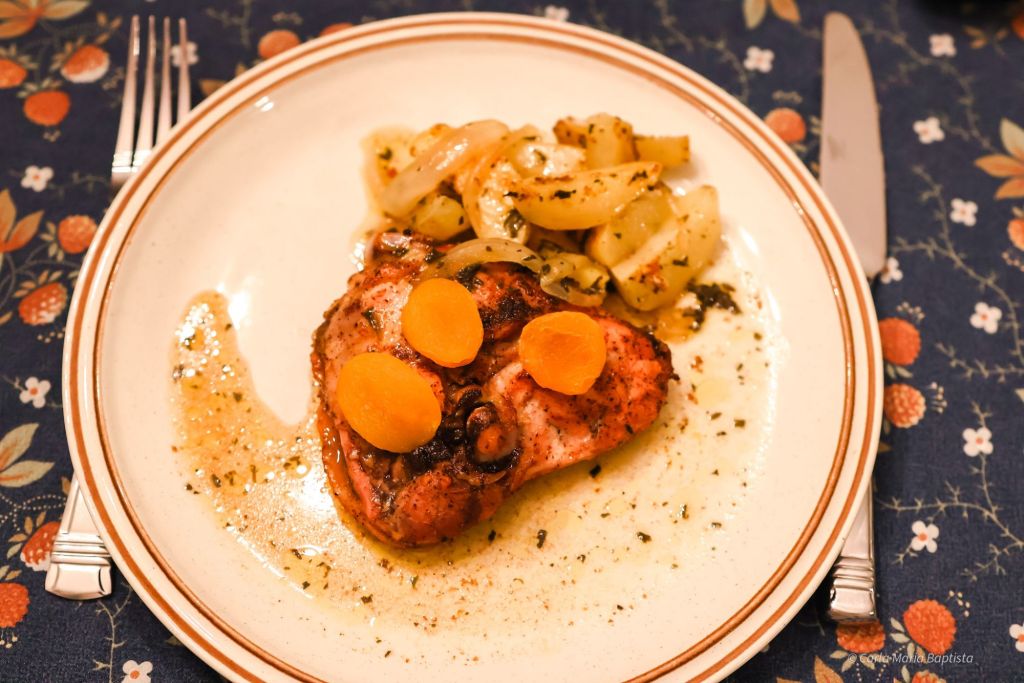
And that is not very difficult — especially when you once had a good mentor.
Here is where memory steps in.
Portugal — home of the Lusitanos, yes, but also a true crossroads of civilizations — has always been a melting pot of cultures and traditions. And Lisbon, once Olissipo, was a restless port where Greeks, Phoenicians, and traders from distant lands came and went, bringing spices, dried fruits, oils, and ideas.
That History never left our kitchens.
You still find it in words, in architecture, and in recipes that seem to belong to many places at once.
Tonight, that history landed on my baking tray.
Sweet dried apricots.
Citrus juice.
Olive oil.
Herbs from my garden.
Paprika warming everything like low winter sun.
Comfort food, yes.
But also sun on a plate.
Chicken Thighs in a Bed of Onions and Potato Wedges
Ingredients
For the base
2 large onions, thinly sliced
Olive oil, for drizzling
1–2 teaspoons dried herbs (thyme, oregano, or mixed herbs)
For the potatoes
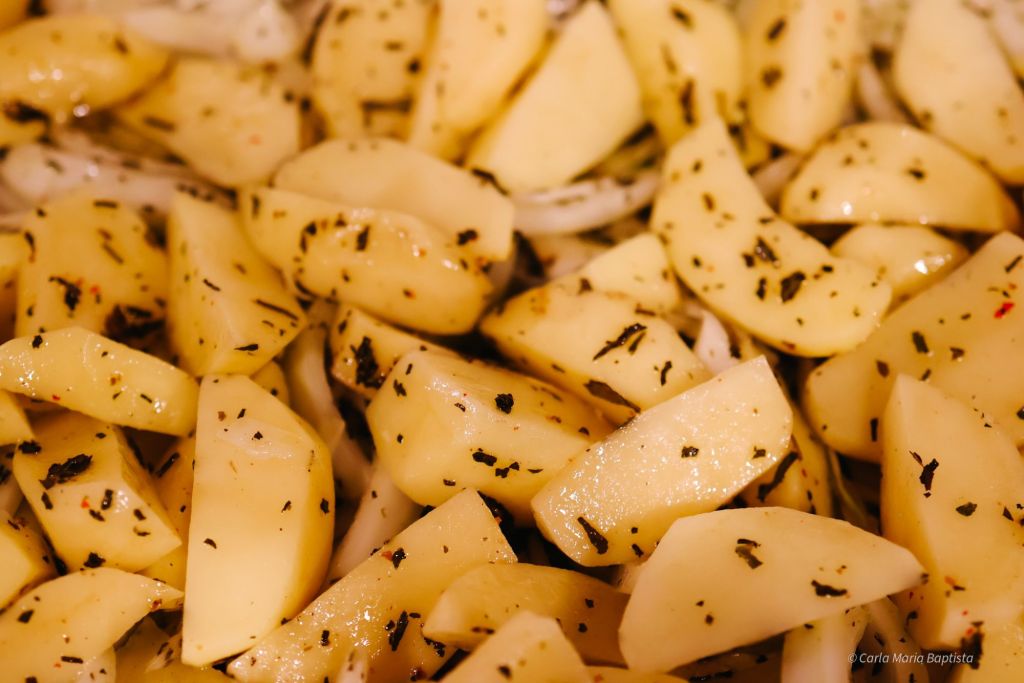
4–5 medium potatoes, cut into wedges
2 tablespoons olive oil
Salt, to taste
1 teaspoon paprika
½ teaspoon freshly ground green pepper
½ teaspoon freshly ground black pepper
For the chicken
4 bone-in, skin-on chicken thighs
Juice of 1 lemon
1 teaspoon paprika
1 teaspoon dried herbs
Freshly ground black pepper
To finish
A handful of dried apricots (about 8–10 pieces)
Preparation
1. Preheat the oven to 400°F (200°C).
2. Prepare the base.
Spread the thinly sliced onions evenly on the bottom of a large baking dish. Drizzle with olive oil and sprinkle with dried herbs.
3. Season the potatoes.
In a bowl, toss the potato wedges with olive oil, salt, paprika, and peppers. Arrange them over the onions.
4. Marinate the chicken.
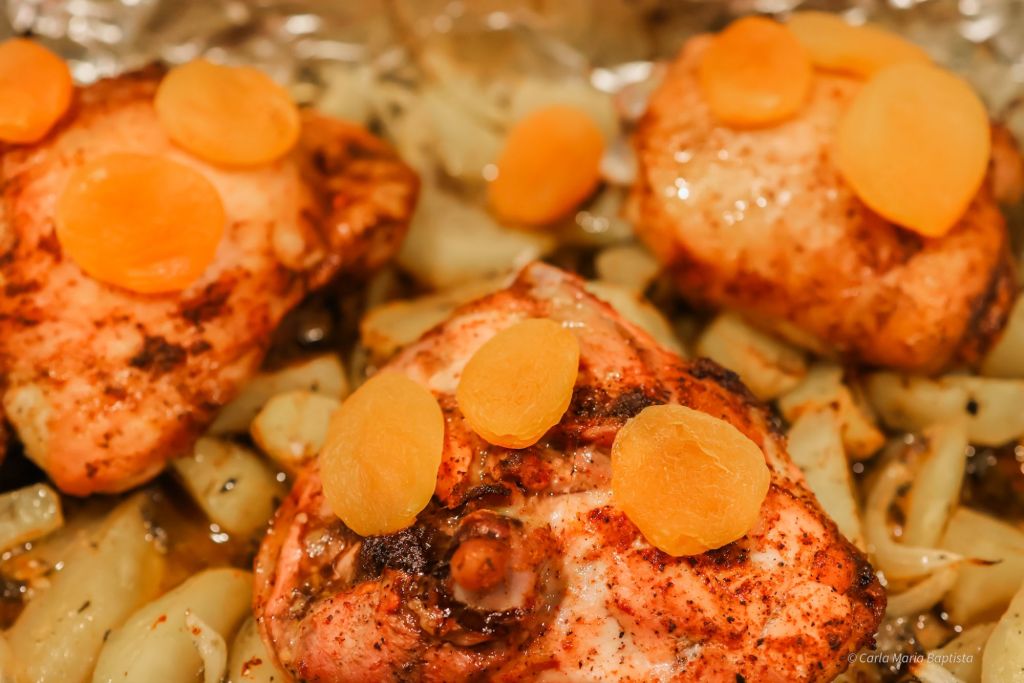
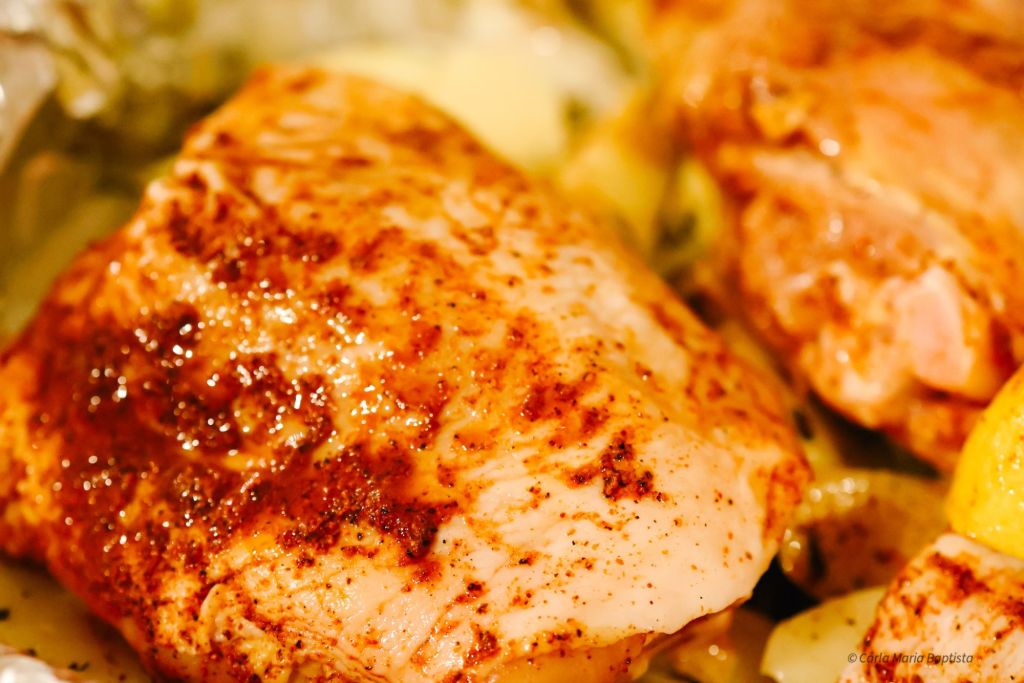
Mix the lemon juice, paprika, dried herbs, and black pepper. Coat the chicken thighs well and place them on top of the potatoes, skin side up.
5. First bake (covered).
Cover the dish tightly with aluminum foil and bake for 30–35 minutes. This allows the onions to soften and the potatoes to cook through while keeping everything tender.
6. Second bake (uncovered).
Remove the foil and continue baking for 25–30 minutes, until the chicken skin is golden and the internal temperature reaches 165°F (74°C).
7. Final touch.
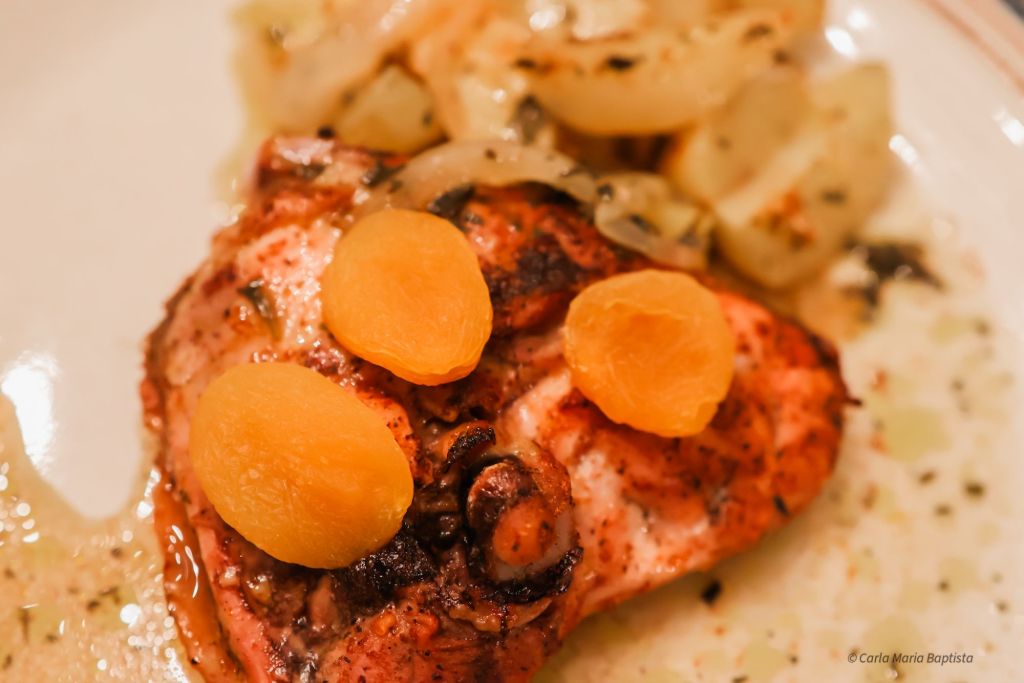
In the last 5 minutes of baking, scatter the dried apricots over the chicken so they warm and soften slightly.
Serve
Let the dish rest for 5–10 minutes before serving.
Lift each thigh and scoop from the bottom so you gather onions, potatoes, and pan juices together. Spoon that lemon-apricot jus over everything.
No bread needed. The potatoes do all the work, soaking up every drop.
Why It Works
Sweetness from:
Onions
Apricots
Brightness from:
Lemon
Depth from:
Paprika
Herbs
Olive oil
It tastes older than the recipe itself. Familiar, even if you have never made it before.
That is the magic of layered memory cooking.
Lunch Tomorrow (Microwave Reheating Tips)
This is absolutely coming with me for lunch.
The flavors deepen overnight. The apricots melt further into the sauce. The potatoes absorb even more of that citrus-onion jus.
To reheat in the microwave without drying it out:
Place your portion in a microwave-safe dish.
Spoon some of the pan juices over the top.
Cover loosely (microwave lid or damp paper towel).
Heat in 1-minute intervals at medium power.
Let it rest 30–60 seconds before eating.
If it looks slightly dry, add a tiny splash of water or a small drizzle of olive oil before reheating. Stir the potatoes gently halfway through so they heat evenly.
It will not be crispy — but it will be deeply flavorful and comforting.
Spring is not fully here yet.
But evenings like this — onions melting, apricots softening, windows cracked open to cool air — feel like a quiet negotiation between seasons.
If it isn’t Spring yet, it should.
Um Tabuleiro de Sol no Meio do Inverno
Ainda é Inverno.
Mas, se ainda não é Primavera, devia ser.
Dias amenos. Manhãs e fins de tarde mais frios. O melhor dos dois mundos.
Os pássaros já ensaiam o regresso. A Natureza estica-se devagar, como se estivesse a testar a luz. Os sentidos também despertam. Uma brisa fresca entra quando abro as janelas de manhã e, ao final do dia, há aquele conforto secreto de misturar o ar frio da rua com o aroma de um jantar quente a cozinhar.
Por isso continuo a cozinhar com o que encontro no frigorífico e na despensa. Para a semana será tempo de ir às compras. Por agora, é tempo de aproveitar o que há.
E isso não é difícil, sobretudo quando se teve uma boa mentora.
É aqui que a Memória entra.
Portugal, terra dos Lusitanos, mas também verdadeiro cruzamento de civilizações, sempre foi um ponto de encontro de culturas e tradições. E Lisboa, outrora Olissipo, era um porto inquieto onde gregos, fenícios e tantos outros comerciantes chegavam e partiam, trazendo especiarias, frutos secos, azeites e ideias.
Essa História nunca saiu das nossas cozinhas.
Ainda se encontra nas palavras, na arquitetura e em receitas que parecem pertencer a vários lugares ao mesmo tempo.
Esta noite, essa História pousou no meu tabuleiro.
Alperces secos.
Sumo de citrinos.
Azeite.
Ervas secas da minha horta.
Colorau doce a aquecer tudo como um sol baixo de Inverno.
É comida de conforto, sim.
Mas também é sol no prato.
Coxas de Frango sobre Cama de Cebola e Batatas em Gomos
Ingredientes
Para a base
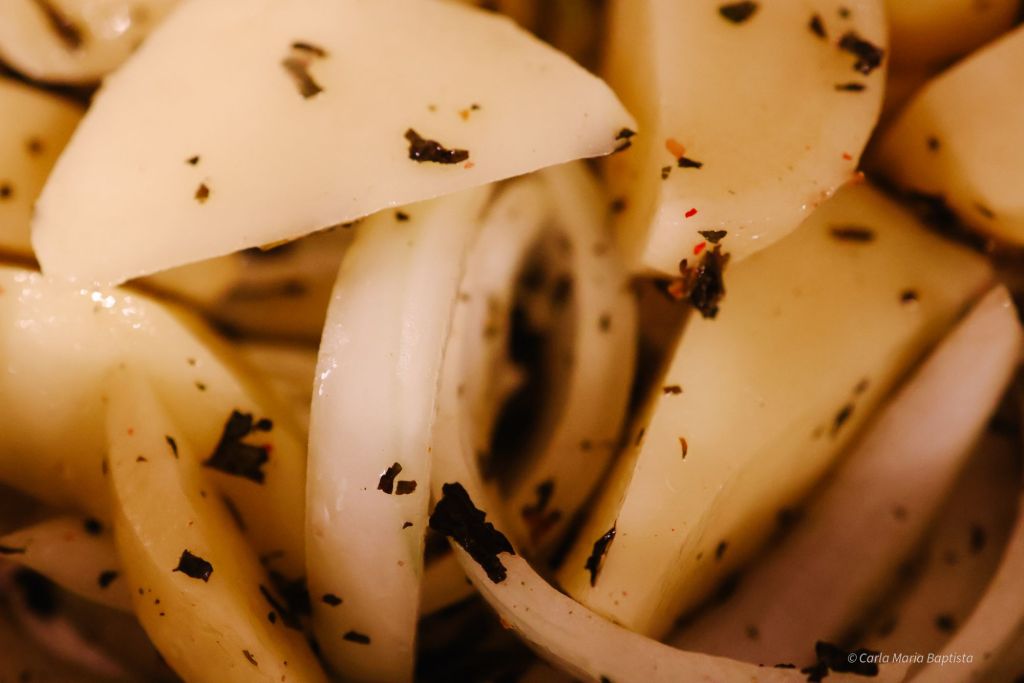
2 cebolas grandes, cortadas em rodelas finas
Azeite, para regar
1–2 colheres de chá de ervas secas (tomilho, orégãos ou mistura de ervas)
Para as batatas
4–5 batatas médias, cortadas em gomos
2 colheres de sopa de azeite
Sal, a gosto
1 colher de chá de colorau doce
½ colher de chá de pimenta verde moída na hora
½ colher de chá de pimenta preta moída na hora
Para o frango
4 coxas de frango com pele e osso
Sumo de 1 limão
1 colher de chá de colorau
1 colher de chá de ervas secas
Pimenta preta moída na hora
Para finalizar
Um punhado de alperces secos (8–10 unidades)
Preparação
1. Pré-aquecer o forno a 200°C.
2. Preparar a base.
Dispor as rodelas de cebola no fundo de um tabuleiro grande. Regar com azeite e polvilhar com as ervas secas.
3. Temperar as batatas.
Numa taça, envolver os gomos de batata com o azeite, sal, colorau e as pimentas. Colocar por cima da cebola.
4. Temperar o frango.
Misturar o sumo de limão com o colorau, as ervas e a pimenta preta. Envolver bem as coxas de frango e colocá-las sobre as batatas, com a pele virada para cima.
5. Primeira fase (tapado).
Cobrir bem o tabuleiro com folha de alumínio e levar ao forno durante 30–35 minutos. Esta fase permite que a cebola amoleça e que as batatas cozinhem, mantendo tudo suculento.
6. Segunda fase (destapado).
Retirar a folha de alumínio e deixar assar mais 25–30 minutos, até a pele ficar dourada e o frango atingir 74°C no interior.
7. Toque final.
Nos últimos 5 minutos, distribuir os alperces secos por cima do frango para aquecerem e amolecerem ligeiramente.
Servir
Deixar repousar 5–10 minutos antes de servir.
Levantar cada coxa e servir apanhando também cebola, batatas e molho do fundo do tabuleiro. Regar tudo com o molho de limão e alperce.
Não é preciso pão.
As batatas absorvem cada gota.
Porque Resulta
Doçura de:
Cebola
Alperce
Frescura de:
Limão
Profundidade de:
Colorau
Ervas
Azeite
Sabe a receita antiga, mesmo sendo feita hoje. Familiar, mesmo para quem nunca a provou.
É essa a magia da cozinha feita de camadas e memória.
Almoço do Dia Seguinte (Reaquecer no Micro-ondas)
Esta receita melhora no dia seguinte.
Os sabores intensificam-se. O alperce integra-se ainda mais no molho. As batatas absorvem o sumo cítrico e a cebola.
Para reaquecer sem secar:
Colocar a porção num recipiente próprio para micro-ondas.
Regar com um pouco do molho do tabuleiro.
Tapar ligeiramente (com tampa própria ou papel húmido).
Aquecer em intervalos de 1 minuto em potência média.
Deixar repousar 30–60 segundos antes de comer.
Se parecer um pouco seco, juntar um pequeno fio de azeite ou umas gotas de água antes de aquecer. Mexer ligeiramente as batatas a meio para aquecerem de forma uniforme.
Não ficará estaladiço, mas ficará reconfortante e cheio de sabor.
A Primavera ainda não chegou completamente.
Mas noites assim: cebolas a derreter, alperces a amolecer, janelas entreabertas para o ar fresco, parecem uma negociação tranquila entre Estações.
Se ainda não é Primavera, devia ser.


 A Toast Between Seasons