
It’s Carnival! Out to the streets, revelers—it’s time for celebration!In Portugal, it’s a time for costumes, parades, pranks, playful tricks, and of course… delicious food!
Even while living far away, I love keeping traditions alive—but I also enjoy discovering new ones.
In Dutch Pennsylvania, Carnival Tuesday is known for eating fasnacht and King Cake.
Fasnacht (also spelled fosnot or fosnaught) means “fast night” and has its roots in Germany, Switzerland, and Austria. These fried treats, similar to donuts, were a way to empty the pantry of butter, sugar, or lard—ingredients that couldn’t be consumed during Lent.
King Cake is part of the “Bolo Rei” or “King’s Cake” family, which exists in many countries, each with their own version, but all based on the same idea: a festive cake eaten between January 6th and Carnival Tuesday, typically round or oval with a hole in the center, and hiding a small object inside. Whoever finds the object is said to receive good fortune—but also gets the task of buying the next cake!
According to local tradition here, King Cake is eaten on Mardi Gras (which literally means “Fat Tuesday”). The cake is oval, made with brioche-like dough, and decorated in the official Mardi Gras colors: purple, gold, and green. Hidden inside is a tiny baby figure—representing the Baby Jesus—that brings luck and prosperity to the person who finds it. But with that blessing comes responsibility: that person is expected to buy the next King Cake and host the following year’s Mardi Gras party. This custom is inspired by the traditions of New Orleans, which in turn were shaped by the region’s strong French influence—after all, Mardi Gras is French for Fat Tuesday.
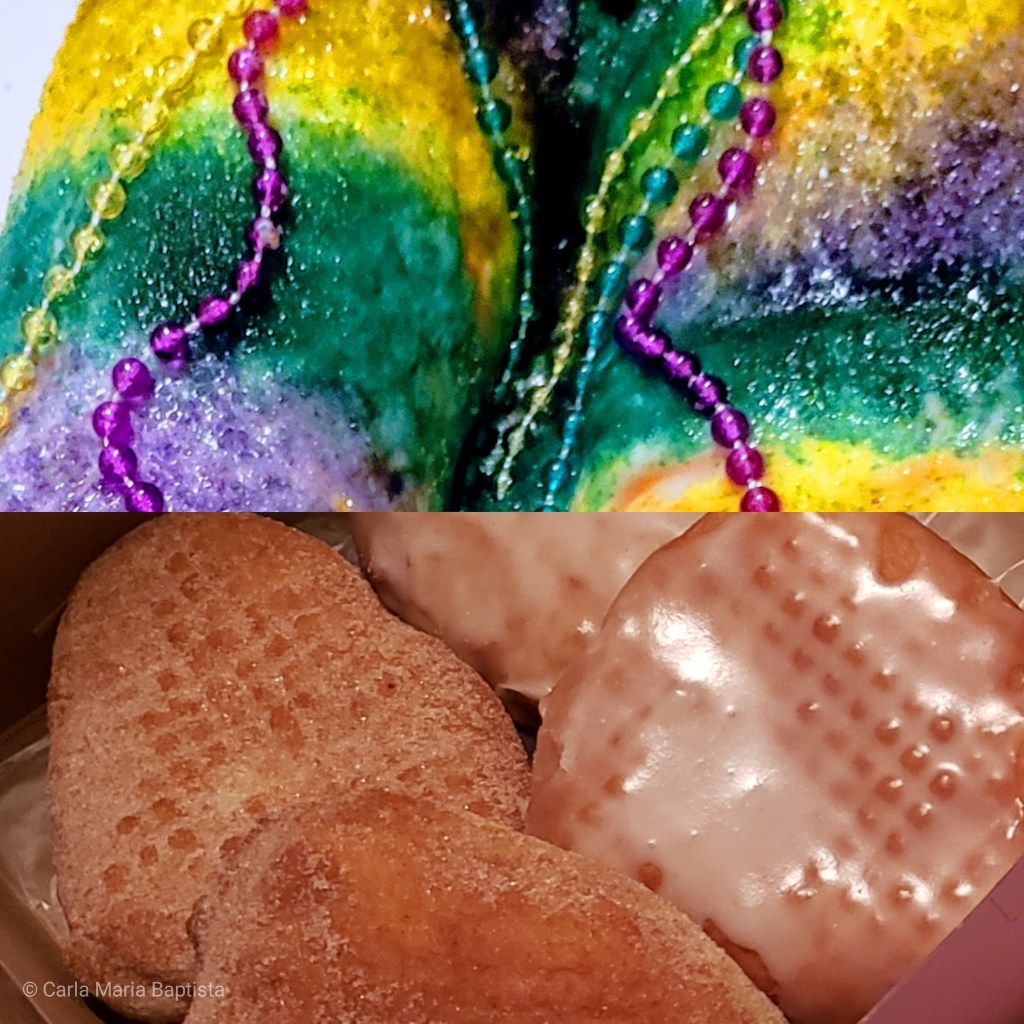
É Carnaval! Para a rua foliões, que é tempo de folia! Em Portugal é tempo de máscaras, desfiles, brincadeiras, partidas e claro boa comida! Estando longe, gosto de manter as tradições mas também gosto de conhecer tradições diferentes. Na Dutch Pennsylvania, Terça-feira de Carnaval é dia de comer “fasnacht” e “King Cake”.
“Fasnacht” (fosnot ou fosnaught) e significa “noite de jejum”, tendo a sua origem na Alemanha, Suiça e Aústria. São fritos, tipo donuts, que seriam uma forma de esvaziar a despensa da manteiga, açúcar ou banha, produtos esses que não se poderiam comer durante a Quaresma.
“King Cake” (literalmente “Rei Bolo”) faz parte do grupo dos Bolo Rei ou bolo de reis, que encontramos em diferentes paises, com diferentes receitas, mas com o mesmo conceito: um bolo que pode ser comido entre 6 de Janeiro e Terça-feira de Carnaval, de forma redonda ou oval, com um buraco no meio e um objecto escondido, simbolo de felicidade para quem o encontra mas que também determina quem irá comprar o próximo bolo.
De acordo com a tradição desta região, o dia de comer King Cake é Mardis Gras (ou Terça-feira Gorda). O bolo é oval, feito com uma massa tipo brioche, decorado com as cores de Mardis Gras (roxo, amarelo e verde) e lá dentro encontra-se escondido um bébé (simbolizando o Menino Jesus) que trará prosperidade e sorte a quem o encontrar, mas que também implica a responsabilidade de comprar o King Cake no ano seguinte e ser o anfitrião da próxima festa de Mardi Gras. Aqui temos presente inspiração dos usos e costumes de New Orleans que, por sua vez, são resultado da influência francesa presente nessa região, afinal, a tradução do francês Mardis Gras, significa Terça-feira Gorda.


 A Toast Between Seasons