
When I was a child, I had a small toy pagoda. It lived in my hands, on the floor beside me, inside the little worlds I built while playing. It was unlike anything around me — so different from the familiar lines and structures of the buildings in my everyday life. That small pagoda carried questions with it. So many questions.
Some answers came from my family. Others came from books, documentaries, and quiet moments spent reading, watching, and wondering. Little by little, I was transported into a completely different culture and world — one that felt distant, mysterious, and deeply beautiful.
Had I ever visited that world?
Not yet.
But it has lived on my bucket list for as long as I can remember.
So imagine my surprise — and my delight — when I discovered that there was a pagoda close enough to reach. Close enough to stand before. Close enough to see with my own eyes.
You’re right. I had to go.
A Pagoda Above the City
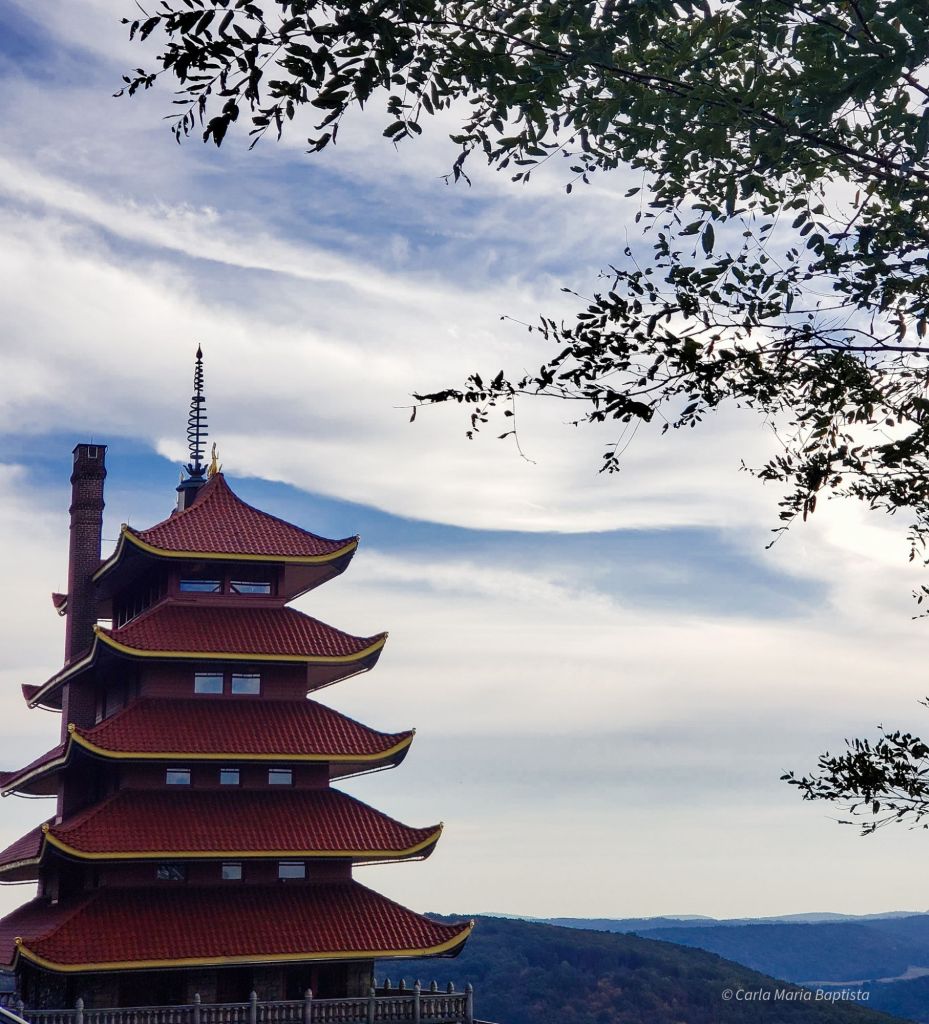
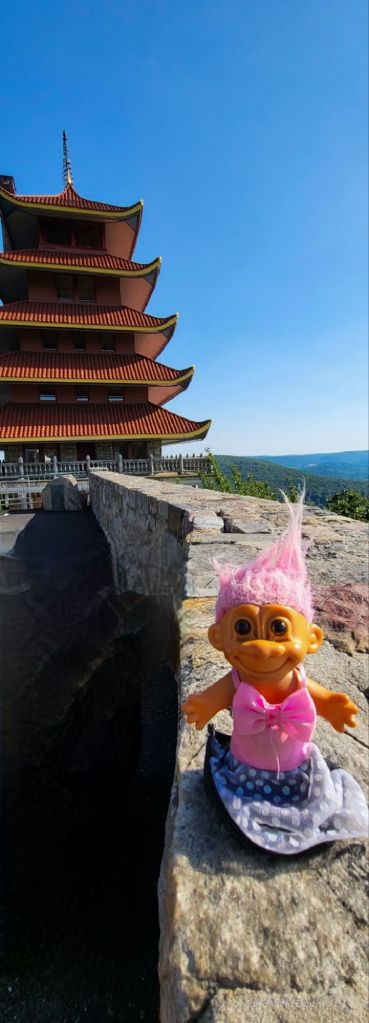
Perched high above Reading, Pennsylvania, the Reading Pagoda rises from the wooded slopes of Mount Penn, quietly watching over the city below. Built between 1907 and 1908 by local businessman William Abbott Witman, Sr., it was originally intended as the centerpiece of a grand resort and restaurant. Its inspiration came from the pagoda at Nagoya Castle in Japan — an ambitious and unexpected vision for this part of the world.
The resort never came to be. Instead, in 1911, Witman donated the unfinished pagoda and surrounding land to the City of Reading. Over time, what began as a private dream evolved into a public symbol — one that generations have come to recognize as part of Reading’s identity.
Architecture, Perspective, and Story
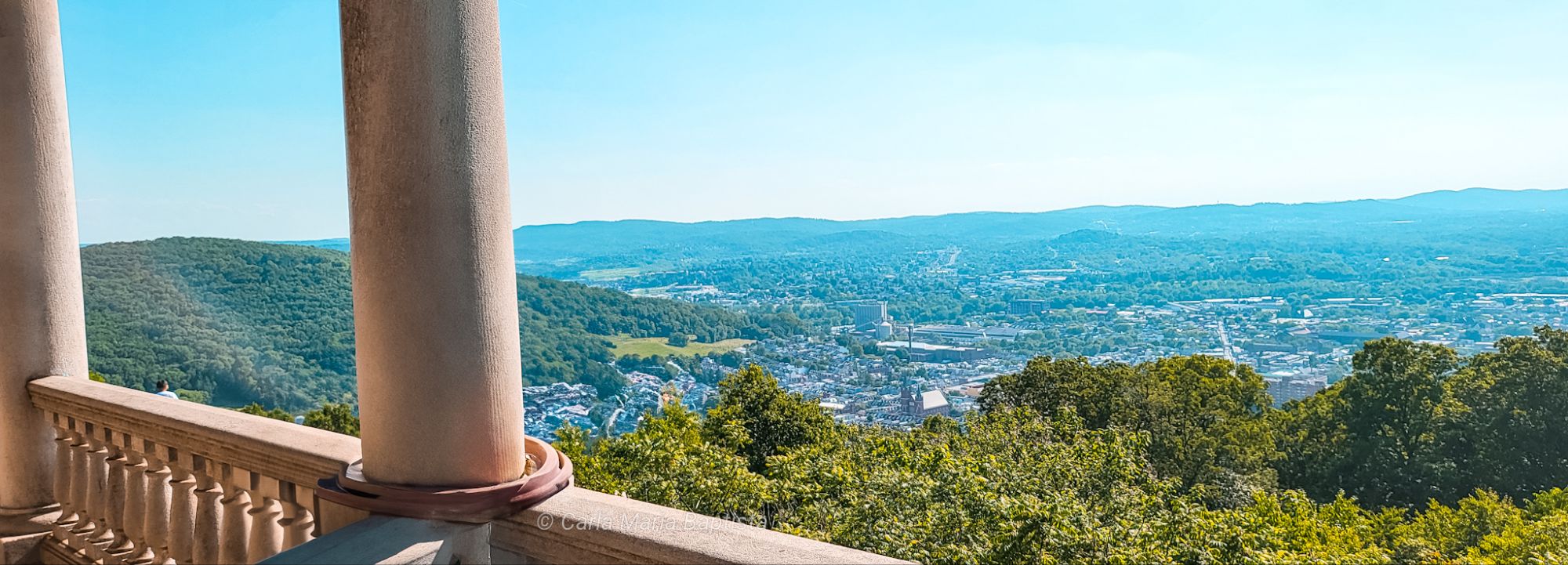
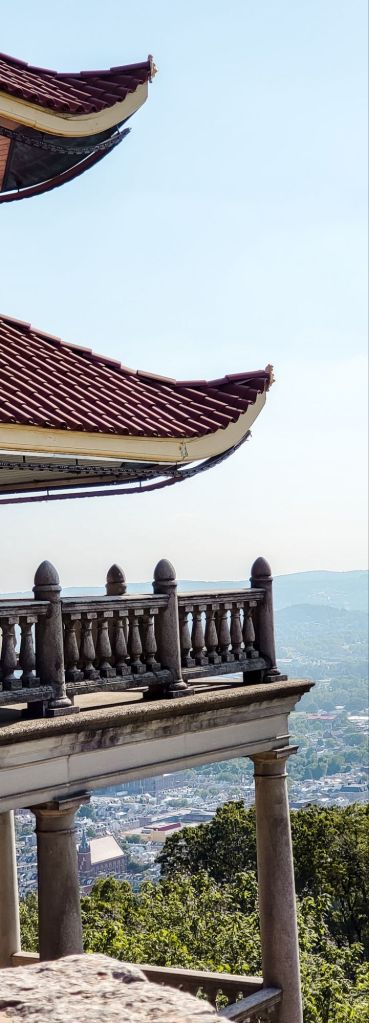
Standing approximately 886 feet above sea level, the seven-story pagoda offers sweeping panoramic views of Reading and the surrounding countryside. On clear days, the horizon stretches far, inviting you to pause and simply take it all in.
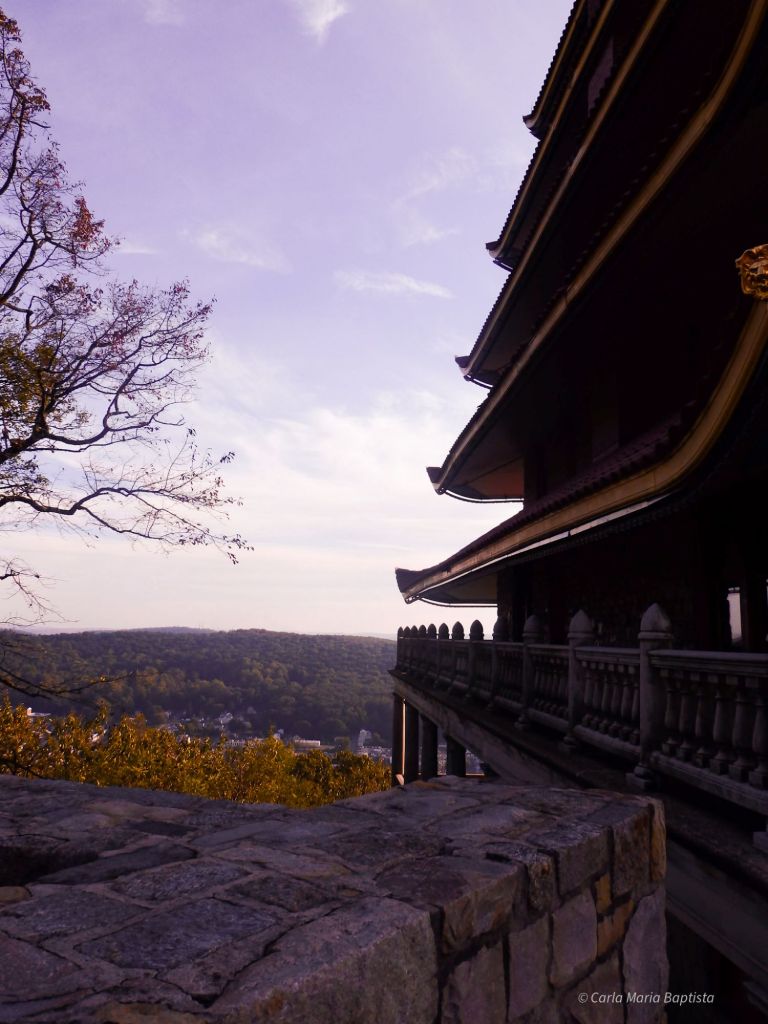
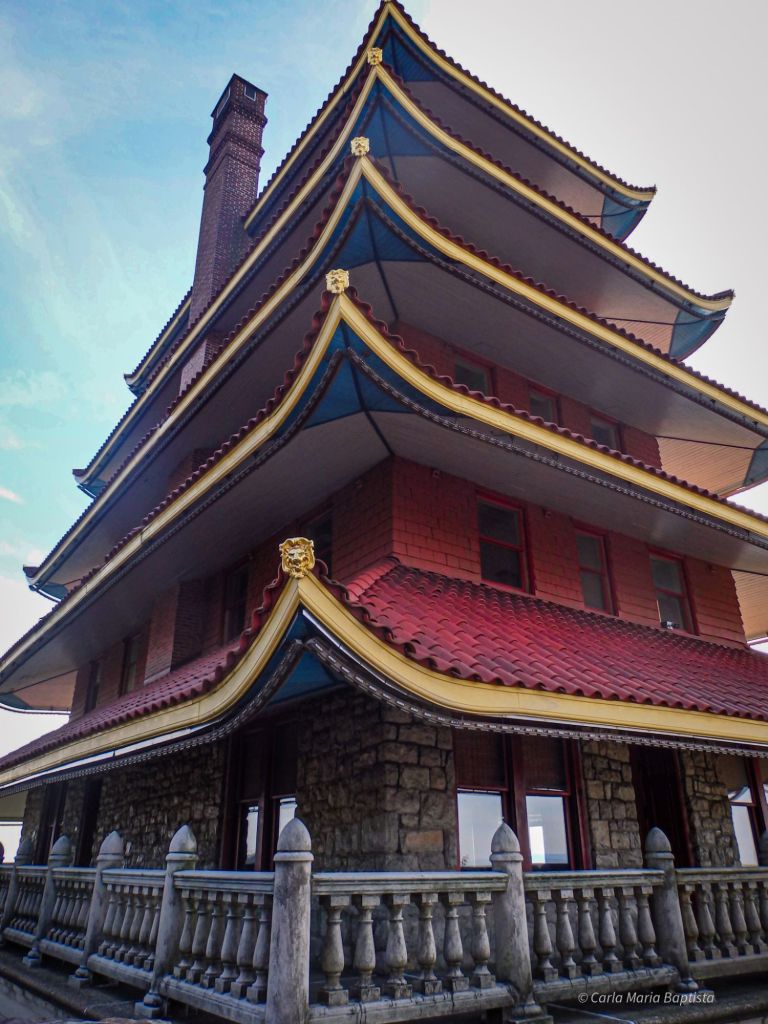
Architecturally, it is one of the few pagoda-style structures in the United States, and possibly the only one designed with a fireplace and chimney — a practical detail that hints at its original hospitality ambitions. In 1972, the building was added to the National Register of Historic Places, honoring both its uniqueness and its lasting significance.
Over the years, the pagoda has played many roles: a scenic overlook, a civic symbol, and even a signaling point. Before radio became common, lights from the pagoda were used to communicate news and emergencies to the city below. A large Japanese bell dating back to 1739 once hung inside, adding another layer of cultural intrigue and quiet mystery.
Standing There, At Last
Were my expectations high? Very. Childhood wonder has a way of setting the bar somewhere in the clouds, making it nearly impossible for reality to compete. And yet — standing there, overlooking the city — I felt something familiar stir.
The view was astounding. The air felt still. The moment was expansive and grounding all at once. It wasn’t exactly what I imagined as a child… but somehow, it was exactly what I needed.
Today, the pagoda sits at the end of Skyline Drive, its grounds open from dawn to dusk. While the interior is currently closed for restoration, the experience of being there — of seeing the city from above, of feeling history and imagination meet — is more than enough.
Why the Reading Pagoda Matters
The Reading Pagoda isn’t just a landmark. It’s a reminder of curiosity — of dreams that travel across cultures and generations. It’s a place where a child’s questions quietly meet an adult’s reflection.
For me, it felt like a small reunion — with wonder, with memory, and with the child who once held a small toy pagoda and imagined an entire world beyond it.
And sometimes, that is the most meaningful journey of all.
O Pagode de Reading: Um Encanto de Infância Revisitado
Quando eu era criança, tinha um pequeno pagode de brincar. Vivia nas minhas mãos, no chão ao meu lado, dentro dos pequenos mundos que eu criava enquanto brincava. Era diferente de tudo o que me rodeava, tão distinto das linhas e estruturas familiares da construção da minha vida real. Aquele pequeno pagode trazia consigo perguntas. Tantas perguntas…
Algumas respostas vieram da minha família. Outras encontrei-as nos livros ou através dos documentários, de momentos silenciosos passados a ler, a observar e a imaginar. Pouco a pouco, era transportada para uma cultura e um mundo completamente diferente, distante, misterioso e profundamente belo.
Alguma vez visitei esse mundo?
Ainda não.
Mas ele vive na minha lista de projectos há tanto tempo quanto me lembro.
Por isso, imaginem a minha surpresa (e o meu encantamento!) quando descobri que existia um pagode suficientemente perto de mim. Um pagode inspirado no Japão, tão diferente e ao mesmo tempo tão familiar. Perto o bastante para lá chegar. Perto o bastante para o ver com os meus próprios olhos.
Têm razão. Tinha mesmo de ir.
Um Pagode Sobre a Cidade
Erguido bem acima de Reading, na Pensilvânia, o Pagode de Reading nasce nas encostas arborizadas do Monte Penn, observando silenciosamente a cidade lá em baixo. Construído entre 1907 e 1908 por William Abbott Witman, Sr., um empresário local, foi inicialmente pensado como o centro de um grande resort com restaurante. A inspiração veio do pagode do Castelo de Nagoya, no Japão, uma visão ambiciosa e invulgar para esta região.
O resort nunca chegou a concretizar-se. Em 1911, Witman doou o pagode ainda inacabado e os terrenos envolventes à cidade de Reading. E, com o tempo, aquilo que começou como um sonho pessoal transformou-se num símbolo público, um elemento que várias gerações passaram a reconhecer como parte da alma da cidade.
Arquitetura, Perspetiva e História
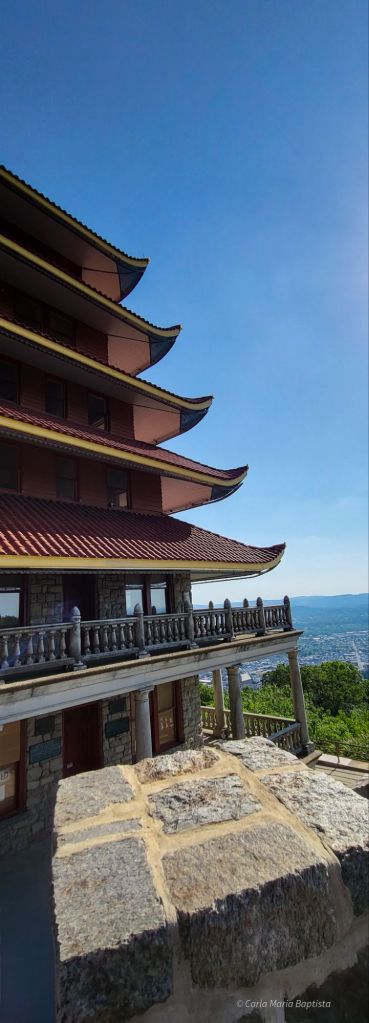
Situado a cerca de 886 pés acima do nível do mar, o pagode de sete andares oferece vistas panorâmicas amplas sobre Reading e a paisagem circundante. Em dias limpos, o horizonte estende-se ao longe, convidando a uma pausa tranquila para olhar em volta.
Arquitectonicamente, é uma das poucas estruturas de estilo pagode nos Estados Unidos e, possivelmente, a única concebida com lareira e chaminé um detalhe prático que revela as intenções originais do projeto. Em 1972, foi incluído no Registo Nacional de Locais Históricos, reconhecendo a sua singularidade e valor duradouro.
Ao longo dos anos, o pagode desempenhou vários papéis: miradouro, símbolo cívico e até ponto de sinalização. Antes de a rádio se tornar comum, as luzes do pagode eram usadas para comunicar notícias e emergências à cidade. Um grande sino japonês datado de 1739 chegou a estar suspenso no seu interior, acrescentando uma camada extra de ligação cultural e mistério.
Finalmente, Ali de Pé
As minhas expectativas eram altas? Muito. A imaginação da infância tende a colocar a fasquia algures nas nuvens, tornando quase impossível que a realidade lhe faça frente. E, ainda assim, ao estar ali a contemplar a cidade, senti algo familiar despertar.
A vista era impressionante. O ar parecia suspenso. O momento era simultaneamente amplo e tranquilizador. Não era exatamente como eu tinha imaginado em criança… mas, de alguma forma, era exactamente aquilo de que precisava.
Hoje, o pagode encontra-se no final da Skyline Drive, com os seus espaços exteriores abertos do amanhecer ao anoitecer. Embora o interior esteja actualmente encerrado para obras de restauro, a experiência de ali estar e de ver a cidade de cima, de sentir o encontro entre história e imaginação é mais do que suficiente.
Porque é o Pagode de Reading Importante
O Pagode de Reading não é apenas um marco arquitetónico. É um símbolo da curiosidade, dos sonhos que atravessam culturas e gerações. É um lugar onde as perguntas de uma criança encontram, em silêncio, as reflexões de um adulto.
Para mim, foi como um pequeno reencontro com o encantamento, com a memória e com a criança que segurava um pequeno pagode e imaginava um mundo inteiro para além dele.
E, por vezes, essa é a viagem mais significativa de todas.


 A Toast Between Seasons
Cultural intrigue and wonder…..what a fascinating structure, and a great journey for you
LikeLiked by 1 person
Indeed it is. Such a fascinating place to experience.
LikeLiked by 1 person