
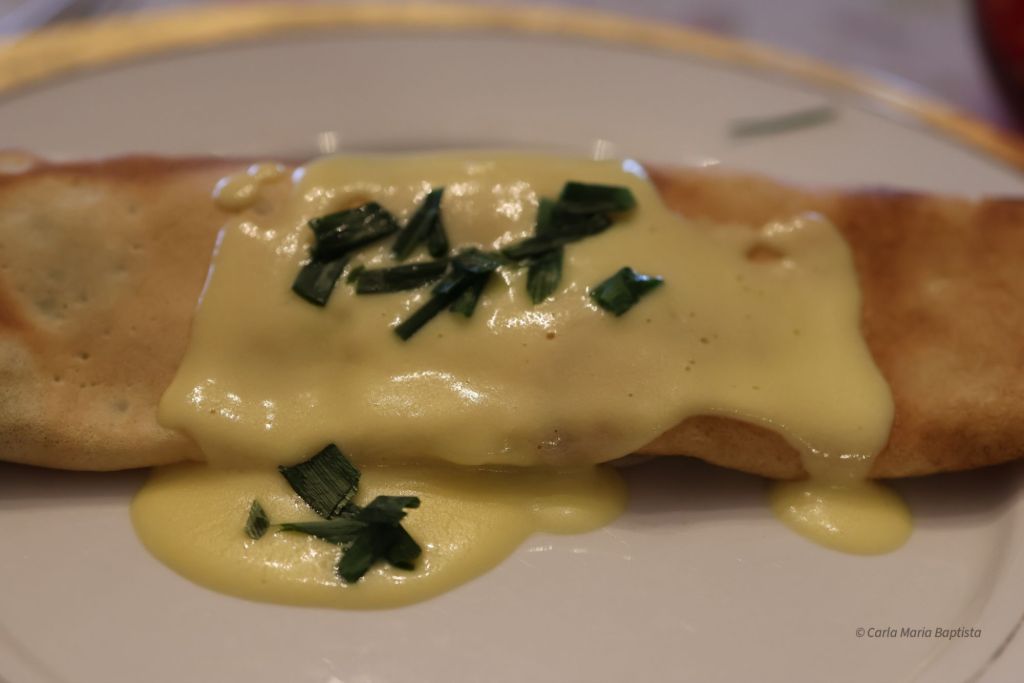
A lunch that started with salmon for the cats… and turned into a small bistro moment at home.
Some days in the kitchen begin without much intention.
A piece of salmon in the oven, two cats quietly observing every movement, and the simple idea of preparing something quick.
But then, as it often happens, the kitchen takes its own direction.
The salmon becomes a filling, the batter turns into crêpes, and before you realize it… a dish appears that asks to be enjoyed slowly.
Ingredients
For the crêpes
– 1 cup (125 g) all-purpose flour
– 2 large eggs
– 1¼ cups (300 ml) milk
– 1 tablespoon melted butter
– pinch of salt
For the salmon filling
– 1 lb (450 g) salmon fillet
– 1 tablespoon olive oil
– salt and pepper (optional)
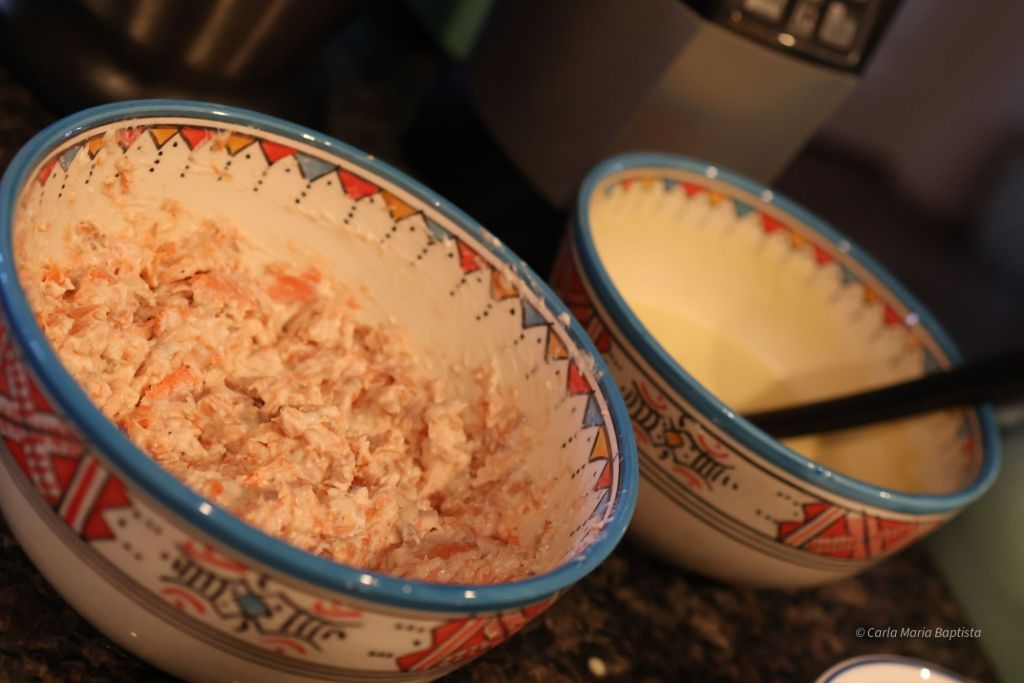
– 1 cup ricotta
– 1 tablespoon chopped chives
– 1 teaspoon lemon zest
– 1 teaspoon lemon juice
– black pepper to taste
For the hollandaise sauce
– 3 egg yolks
– 1 tablespoon lemon juice
– ½ cup (115 g) unsalted butter, melted
– pinch of salt
– pinch of white pepper (optional)
– 1–2 teaspoons warm water (if needed)
Instructions
1. Bake the salmon
Preheat the oven to 400°F (200°C).
Place the salmon on a parchment-lined baking tray and drizzle lightly with olive oil.
Bake for 10–12 minutes, until it flakes easily with a fork.
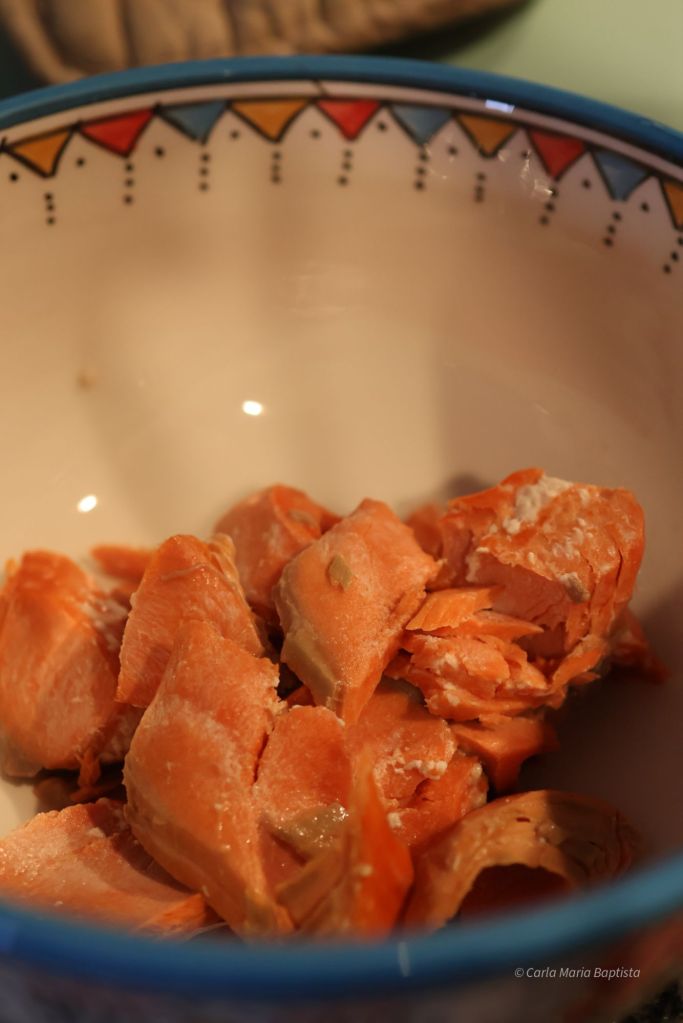
Let it cool slightly, then gently flake it.
2. Prepare the crêpe batter
In a bowl, whisk together the eggs and milk.
Add the flour and salt, mixing until smooth.
Stir in the melted butter.
Let the batter rest for about 10 minutes.
3. Cook the crêpes
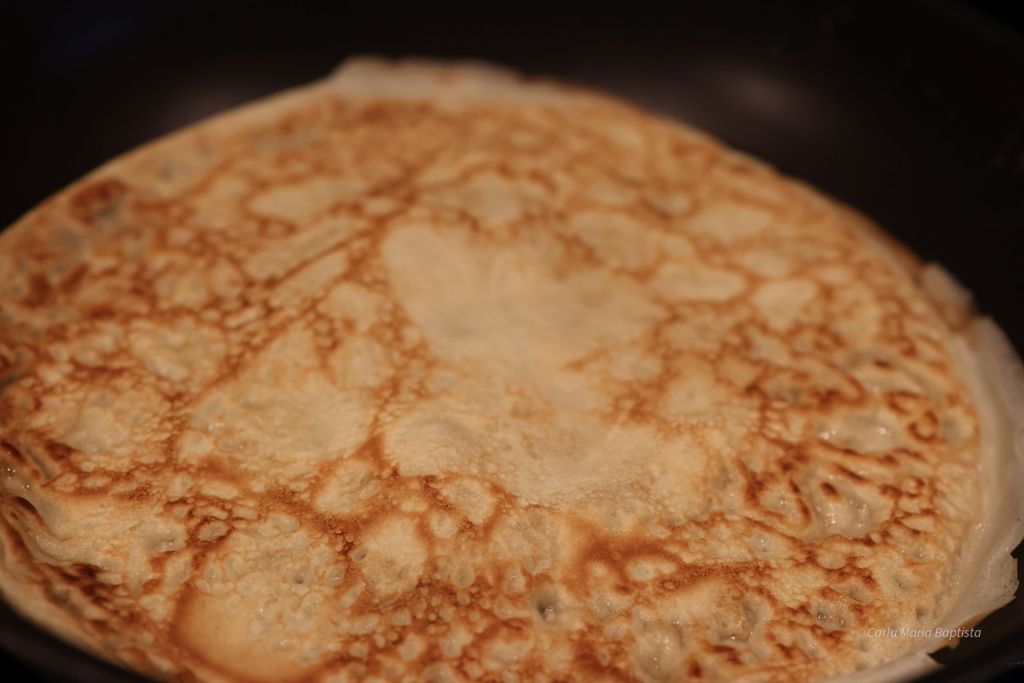
Heat a lightly buttered non-stick pan.
Pour a small amount of batter and swirl to create a thin layer.
Cook for 30–40 seconds, flip, and cook for a few more seconds.
Repeat until all the batter is used and set aside.
4. Prepare the filling
Gently combine:
– flaked salmon
– ricotta
– chives
– lemon zest and juice
– black pepper
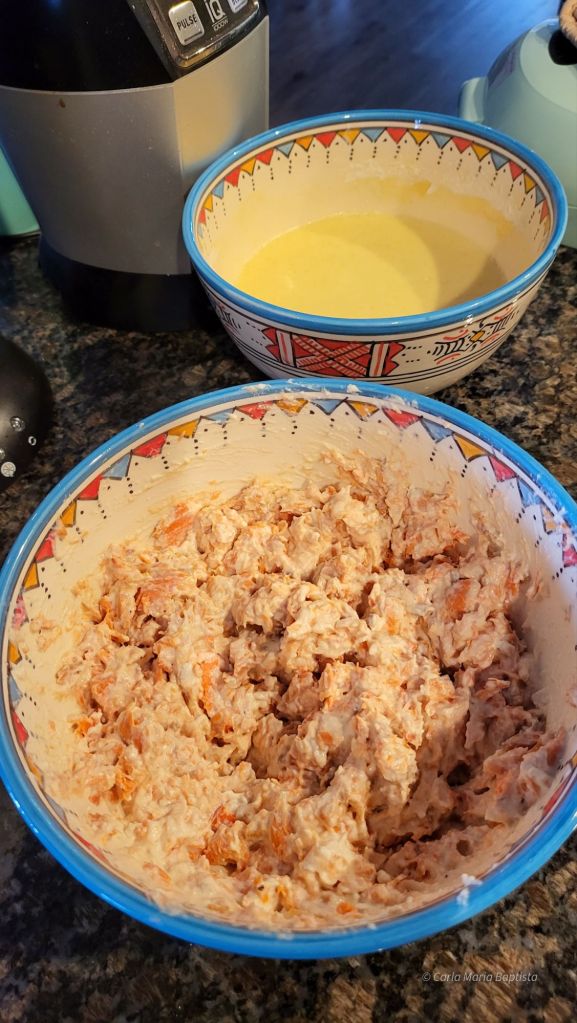
The filling should remain light and creamy, with soft pieces of salmon.
5. Fill the crêpes
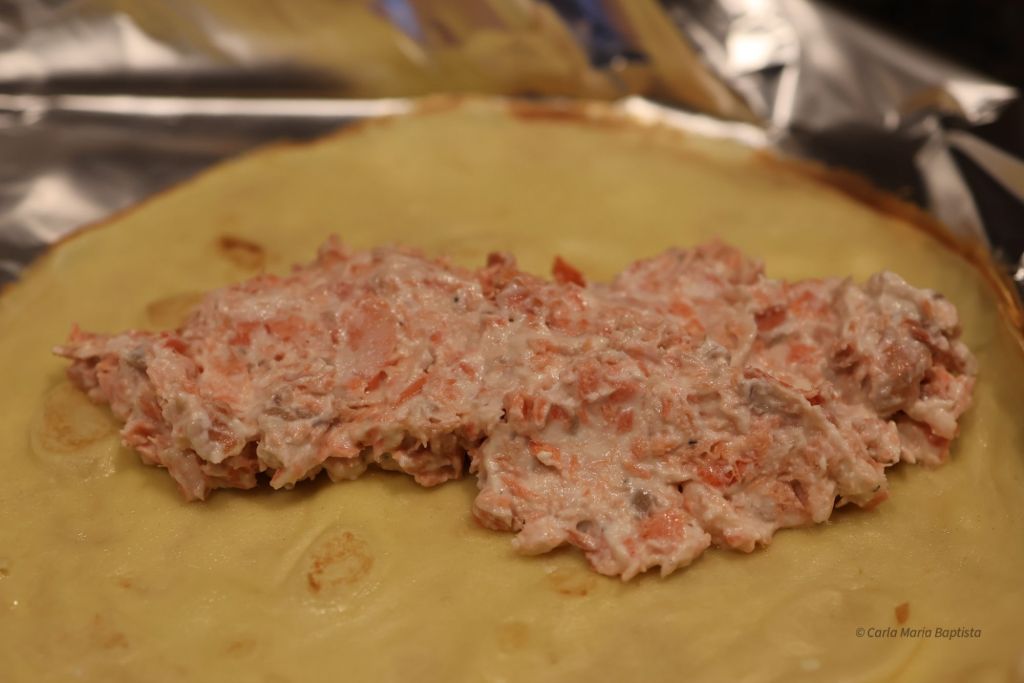
Place about 3 tablespoons of filling on each crêpe.
Fold or roll and keep warm.
6. Prepare the hollandaise
In a heatproof bowl, whisk the egg yolks with the lemon juice.
Place over gently simmering water (double boiler) and whisk continuously.
Slowly drizzle in the melted butter while whisking until the sauce becomes thick and silky.
Season with salt and pepper.
If needed, add a little warm water to adjust the texture.
7. Assemble
Arrange the crêpes on a plate, spoon the hollandaise over the top, and finish with fresh chives.
Serve immediately.
Notes
– Serve with a simple green salad with lemon.
– Hollandaise is best made fresh and served warm.
– This dish is best enjoyed slowly, without rushing.
A small moment at the table
This was one of those meals that began without a plan.
The salmon, originally meant to be shared with the quiet four-legged observers nearby, became something more.
A simple, comforting dish that wasn’t expected… but stayed.
And perhaps that is what makes cooking so special:
not always what we plan, but what happens when we choose to continue.
Crêpes de Salmão com Ricotta e Molho Holandês
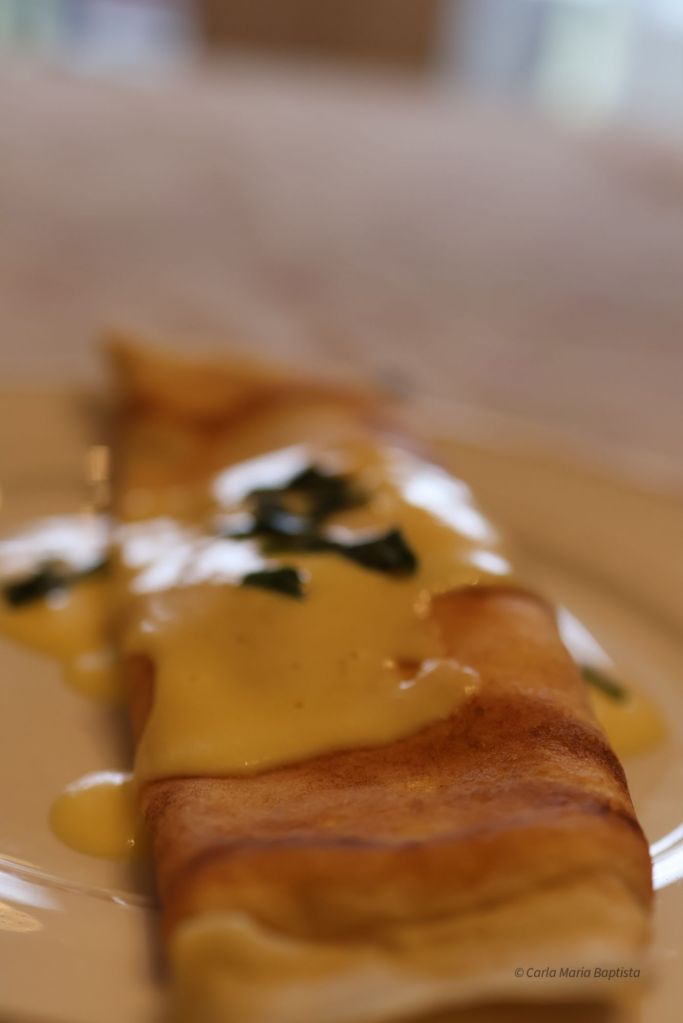
Um almoço que começou com salmão para os gatos… e terminou num pequeno momento de bistrô em casa.
Há dias em que a cozinha começa sem grandes planos.
Um filete de salmão no forno, dois gatos atentos a cada movimento, e a intenção simples de preparar algo rápido.
Mas depois, como tantas vezes acontece, a cozinha vai-nos levando.
O salmão transforma-se em recheio, a massa em crêpes, e quase sem dar por isso… nasce um prato que pede para ser saboreado com calma.
Ingredientes
Para os crêpes
– 125 g de farinha de trigo
– 2 ovos grandes
– 300 ml de leite
– 1 colher de sopa de manteiga derretida
– uma pitada de sal
Para o recheio de salmão
– 450 g de filete de salmão
– 1 colher de sopa de azeite
– sal e pimenta (opcional)
– 1 chávena de ricotta
– 1 colher de sopa de cebolinho picado
– 1 colher de chá de raspa de limão
– 1 colher de chá de sumo de limão
– pimenta preta a gosto
Para o molho holandês
– 3 gemas de ovo
– 1 colher de sopa de sumo de limão
– 115 g de manteiga sem sal, derretida
– uma pitada de sal
– uma pitada de pimenta branca (opcional)
– 1–2 colheres de chá de água morna (se necessário)
Preparação
1. Assar o salmão
Pré-aqueça o forno a 200°C.
Coloque o salmão num tabuleiro forrado com papel vegetal e regue ligeiramente com azeite.
Leve ao forno durante 10–12 minutos, até se desfazer facilmente com um garfo.
Deixe arrefecer ligeiramente e desfie-o em lascas.
2. Preparar a massa dos crêpes
Numa taça, bata os ovos com o leite.
Adicione a farinha e o sal e misture até obter uma massa lisa.
Incorpore a manteiga derretida.
Deixe repousar durante cerca de 10 minutos.
3. Cozinhar os crêpes
Aqueça uma frigideira antiaderente ligeiramente untada.
Deite uma pequena quantidade de massa e rode a frigideira para formar uma camada fina.
Cozinhe durante 30–40 segundos, vire e cozinhe mais alguns segundos.
Repita até terminar a massa e reserve.
4. Preparar o recheio
Misture delicadamente:
– o salmão desfiado
– a ricotta
– o cebolinho
– a raspa e o sumo de limão
– pimenta preta
O objetivo é manter o recheio leve e cremoso, com pedaços suaves de salmão.
5. Rechear os crêpes
Coloque cerca de 3 colheres de sopa de recheio em cada crêpe.
Dobre ou enrole e mantenha quente.
6. Preparar o molho holandês
Num recipiente resistente ao calor, bata as gemas com o sumo de limão.
Leve a banho-maria (sobre água a ferver suavemente), mexendo sempre.
Adicione lentamente a manteiga derretida, em fio, continuando a bater até obter um molho espesso e aveludado.
Tempere com sal e pimenta.
Se necessário, adicione um pouco de água morna para ajustar a textura.
7. Finalizar
Disponha os crêpes no prato, cubra com o molho holandês e finalize com cebolinho fresco.
Sirva de imediato.
Notas
– Pode acompanhar com uma salada simples de folhas verdes e limão.
– O molho holandês deve ser preparado no momento e servido quente.
– Este prato resulta melhor quando tudo é servido com calma… sem pressa.
Um pequeno momento à mesa.
Este foi daquelas refeições que começam por acaso.
O salmão, inicialmente destinado a dividir-se entre mim e os pequenos observadores de quatro patas, acabou por dar origem a algo mais.
Um prato simples, mas reconfortante, daqueles que não estavam planeados… mas que ficam.
E talvez seja isso que torna a cozinha tão especial:
nem sempre é o que planeamos, mas o que acontece quando decidimos continuar.
Discover more from A Toast Between Seasons
Subscribe to get the latest posts sent to your email.


interesting
LikeLiked by 1 person